Despite having 16 million hectares suitable for planting corn, Colombia imported 6.5 million tons of corn in 2022

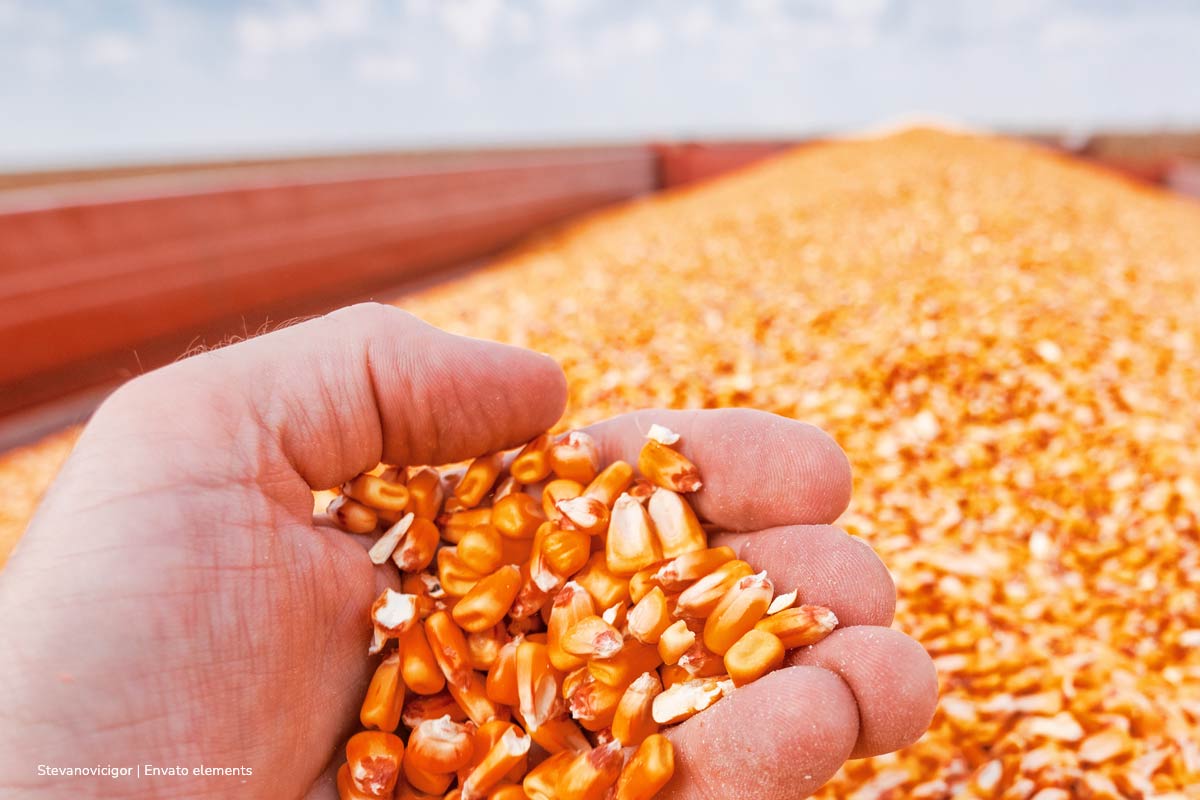
Since before the Spanish Conquest, corn has been an essential ingredient in the cuisine of this region of the planet, being used in a variety of traditional dishes such as arepas, tamales and empanadas.
The Muiscas used corn as a staple food and as the basis of their culture and traditions. This and other indigenous groups introduced this ingredient – and the dishes that could be prepared with it – to the Spaniards, and eventually corn became part of European gastronomy.
You may be interested in: The surprising offer of a bank that pays higher interest rates if the CD is for a shorter term: starting from $100,000
For decades, corn has been a fundamental component of cattle and chicken feed, making it key to the production of milk, beef and chicken.
A widespread crop in Colombia
In the diet of Colombians, corn represents 9% of the daily energy supply, according to Fenalce.
With a presence in 21 of the country’s 32 departments, corn plays a fundamental role in feeding the population and in the national economy. So much so, that it is the third crop with the largest planted area, surpassed only by rice and coffee.
Even though its production is spread throughout the country, it could be greater. According to the Unidad de Planificación Rural Agropecuaria (UPRA), Colombia has an agricultural frontier of 39.2 million hectares. Although 16.1 million of these hectares have potential for corn, only 5.3 million are planted with this crop.
Tendencias:
➜ California subirá su salario mínimo a US$17,40 en 2027: el cambio también eleva a US$72.384 el umbral para ciertos empleados
➜ ¿Le faltan semanas para pensionarse? Tres fallos de 2026 aclaran cuándo deben contarlas aunque el empleador no haya pagado
In 2022, 462,625 hectares of corn were cultivated, producing 1,921,177 tons of corn
Technified and traditional forms of production coexist in Colombia. The former are characterized by monocultures larger than 5 hectares that use machinery, modified seeds, fertilizers and pesticides. The latter are small plantations of native seeds that are worked with hoes and hoes.
This has led corn production in Colombia to have lower productivity rates than in other countries. Proof of this is that, in 2016, yields in the United States reached 11 tons per hectare (t/h), in Brazil 5.6 t/h and in Colombia 3.6 t/h (Fenalce).
Colombia is the largest corn importer in South America
Currently, domestic production satisfies only 21% of the country’s corn consumption. In 2022, 6,498,292 tons were imported (6,119,648 tons of yellow corn and 378,644 tons of white corn).
Colombia is among the main corn importers in South America and the world. The United States is the country’s main corn supplier. Of white corn 100% of imports in 2022 came from this country and of yellow corn 45%, according to Fenalce.
Also read: UBS Credit Suisse acquisition
This dependence on corn imports has several implications for the Colombian economy. On the one hand, there is concern among local producers about competition with U.S. products, which may come at lower prices due to the scale of production and agricultural subsidies received by U.S. farmers.
This concern is exacerbated by the upcoming full tariff relief for corn under the Free Trade Agreement with the United States. Under this trade agreement, Colombia is obliged to gradually reduce tariffs on corn imports, and in 2024 they will be completely eliminated.
This has generated concern among local producers, as they fear that complete corn tax relief will result in an avalanche of imports that will jeopardize the viability of their businesses.
Corn plays a key role in the country’s food security, given its importance as a raw material for livestock production. It is therefore of particular interest to guarantee a stable supply with local production and reduce dependence on imports.