Thousands of MSMEs in Colombia remain afloat in the face of strong economic tensions
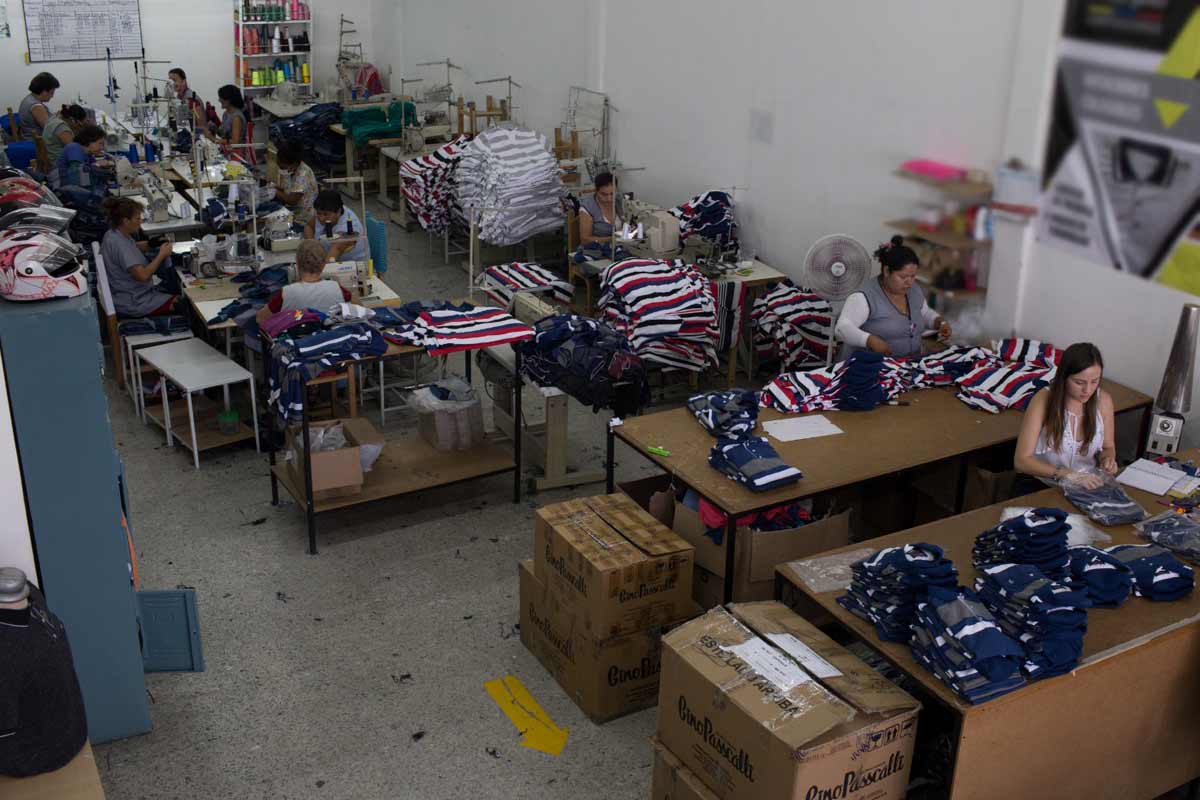
This World Micro, Small, and Medium Enterprises (MSMEs) Day 2023 is being celebrated in the midst of a very complex global and national economic context. MSMEs in Colombia and the world are faced with the burden of inflation, shortages, and economic slowdown, after being in serious trouble due to the confinement on account of the COVID-19 pandemic, a period in which many companies did not manage to survive.
| You may be interested in: Rice growers protest: fear for the future of the sector if there is no agreement on rice floor prices and storage incentive
According to the United Nations, “multiple simultaneous crises have altered the global working environment for entrepreneurs and micro, small and medium-sized enterprises (MSMEs). In addition, conflicts, commodity dependency, geopolitical tensions, and pandemics cause social and economic instability, making MSMEs extremely vulnerable to rising inflation and supply chain disruptions”.
In the world, micro, small, and medium-sized enterprises make up nearly 90% of the business fabric, create and sustain between 60% and 70% of employment, and account for 50% of the world’s Gross Domestic Product (GDP), according to the United Nations.
These companies not only contribute to the dynamics of the global economy and countries but also have the capacity to sustain “livelihoods, particularly among the poorest workers, women, youth and other vulnerable groups”, explains the UN.
In addition, MSMEs have the potential to create jobs and wealth, two elements that have the capacity to transform local economies and promote their growth.
MSMEs in Colombia
MSMEs in Colombia represent the vast majority of companies, they are 99% of the national business fabric according to ANIF Centro de Estudios. Their participation in the economy is so important that their operations constitute 40% of Colombia’s GDP, according to the Center of Studies.
However, Colombia has not been characterized as an industrial country. What was known about the Colombian industry, mostly represented in the textile and clothing industry, has been fading since the announcements of economic liberalization during the presidency of Virgilio Barco and its subsequent implementation under the government of César Gaviria.
Economic liberalization – the process by which countries open their commercial borders for the exchange of products and services with the entire world through a clear reduction or elimination of measures such as tariffs – requires that the competitiveness of partner countries be comparable in order to avoid excessive dependence on imports.
In the 1990s, Colombia began an intense process of replacement of Colombian labor and production by those developed outside the country, which has had an impact on productivity at the national level.
In an economic note on the indicators of economic liberalization, the economist and current general manager of Banco de la República, Leonardo Villar Gómez, wrote: “Capital productivity, which had already begun to decline in the 1980s, declined even more in the 1990s. Private investment increased strongly for some years towards the middle of the decade, but it was concentrated in the construction sector and in service sectors (road infrastructure and telecommunications), which are precisely the least exposed to international competition”.
The effects of economic liberalization are compounded by the effects of the free trade agreements that our country has been signing and implementing with other countries and regions. Through these agreements, hundreds of products can enter the country with very low or no tariffs, which affects the Nation’s income and the productivity and performance of Colombia’s MSMEs, which have to compete with the international supply in the domestic market.
Among the main consequences for the country is the imbalance between its international sales and purchases, known as the current account deficit, which, in other words, shows that more money is leaving the country than is coming in; as well as the loss of productive capacity, company closures and the alarming decrease in employment.
It is in the midst of this situation that the Day of MSMEs is celebrated in Colombia and the world. A date that takes on greater relevance because, despite the complications in production, (high country costs and difficulties to compete with large international productions), many micro, small, and medium enterprises continue standing, sustaining, and creating jobs, keeping the economy moving.
| You may also be interested in: MinComercio launched the Seal and Ranking of Payment in Fair Terms: this is how your company can apply and gain the recognition of suppliers and customers
MinComercio presents the advances in the Reindustrialization Policy
To remedy the political decisions of the past, and in order to commemorate the day of MSMEs in 2023, the Ministry of Commerce, Industry and Tourism highlighted the initiatives it has been carrying out to strengthen MSMEs in Colombia “their productive, administrative, commercial and financial capacities, as well as to promote productive linkages in order to meet the necessary standards for their effective insertion in local and regional commercial circuits, enabling them to take their products to internationalization”, highlights the portfolio.
This is the Reindustrialization Policy, with which “special support instruments have been designed to help them overcome the limitations in terms of productivity, a technological lag, and scarce innovation that they may present”, explains the MinComercio, an entity that has made an investment of $160,000 million in programs and instruments focused on MSMEs.
“With these programs, more than 80,000 MSMEs have been assisted”, explains the Ministry. However, in 2022 alone, more than 310 thousand formal MSMEs were created in Colombia, a figure that adds to the more than 307 thousand productive units formed in 2021, details a report by Confecamaras.
As for him, the Minister of Commerce, Industry and Tourism, Germán Umaña Mendoza, said that “the commitment of our portfolio is to correct mistakes and work together to rebuild the industrial matrix, strengthen and diversify productive activity, sophisticate the production of goods and services to export with greater added value and close the gaps that characterize the structural heterogeneity of our regions”.
And he explained that to achieve these objectives, the Ministry intends to promote and support micro, small, and medium-sized entrepreneurs, “those who struggle every day to move their business forward and who, with the intervention of the State, will surely succeed”, said the head of the ministerial portfolio.
The Ministry’s action plan is based on 10 programs and instruments:
- FortaleSER Program
- ZASCA Reindustrialization Centers
- CREO: Low-amount productive credit for the popular economy.
- Productive Linkages Strategy
- Your Business More Digital
- Internationalization Factories
- More Productive Women
- Trade Strengthening Program for Ethnic Communities
- Opportunities for Entrepreneurship Program
- VUE – Business One-Stop Business Window
Finally, Minister Umaña Mendoza emphasized that the objective of all these programs is to “strengthen the business and socioeconomic fabric of the territories. We want to contribute to strengthening the entrepreneurial ecosystem, with small and medium-sized companies that achieve intelligent and sustainable growth, placing innovation at the heart of Colombia’s industrial and economic strategies”.
| Read more: Stagflation in Colombia: the country could be entering one of the most frightening situations for economists