Health systems financing or on spilt breast milk
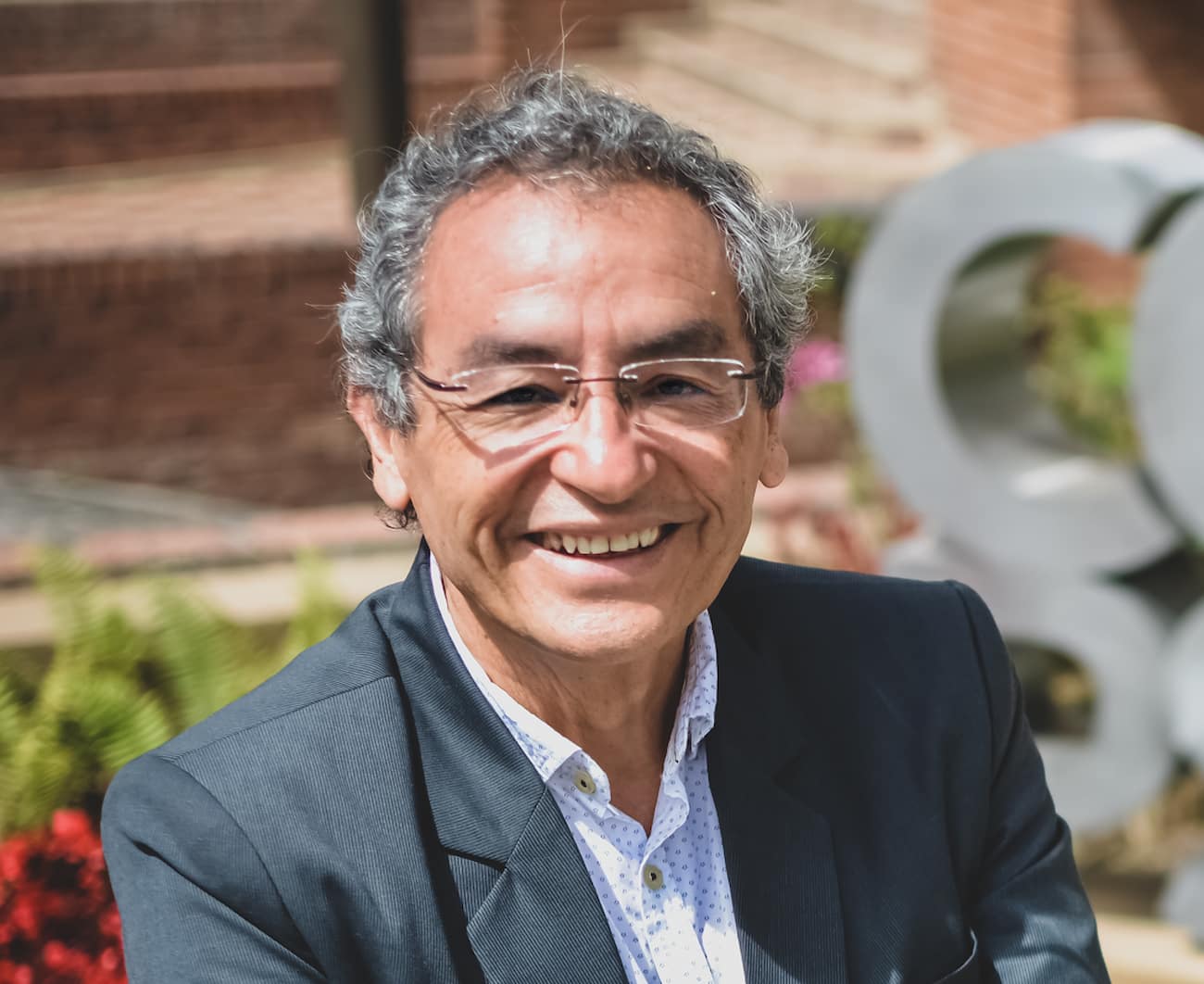
Bernardo Useche
Psychologist from Universidad Nacional de Colombia, PHD in Human Sexuality from IASHS in San Francisco, CA and PhD in Public Health from the University of Texas at Houston.
As he approaches the end of his first year in office, Petro maintains his double position on the health system.
He insists on making statements and decisions in the sense of pushing forward a radical reform of the current insurance model, while personally, or through his ministers, he lets it be known that in one way or another he will end up settling with the unions and political parties that defend the 30 years of Law 100. This double message has strengthened the opposition to the reform, which has focused its criticism on the problems of financing the health system.
You may be interested in: Attention, contributors! Court changed the way of calculating the weeks contributed to pension: benefits to many
A month ago, Petro surprised by stating that he was initiating, by means of an emergency decree in the region, a pilot plan to implement in La Guajira his bill, which is still pending in the Congress of the Republic.
He stated that 300 home care teams will be implemented in the peninsula and an investment plan will be implemented to strengthen public hospitals and Primary Care Centers (CAPS).
By establishing in Decree 1085 of 2023 that “exceptional resources” will be made available for the immediate implementation of the health reform in La Guajira, Petro fueled the discussion that ANDI, ANIF, academics and experts in health systems and opposition politicians have been having in the media, who point out that the reform proposed by the government, rather than solving, will aggravate the problems of health financing.
To the declaration of emergency in La Guajira, ACEMI, the EPS association, replied saying that the priority should be to guarantee the insurers the $10.4 billion that they argue is needed to finish the year and avoid the collapse of services at a national level.
The EPSs argue that the cost of care for their affiliates, plus administrative expenses, exceeds by 7% what they receive from the UPC, the amount they receive from the government per affiliate to cover the benefits plan to which they are entitled.
Those familiar with the health system attribute the current financial crisis mainly to three reasons: the insufficiency of the UPC, especially when the Colombian population is aging and requires more medical attention; to the increasing costs of health technologies and medicines which are paid to the EPSs in addition to the UPC, through the “maximum budgets”; and to the growth in the demand for services, especially after the pandemic due to the backlog which occurred when the system had to focus on emergency care.
Financial unsustainability as an inherent condition of the insurance system has been studied for years by health experts. William Hsiao, in a key article to understand the issue, stated:
“Money is the mother’s milk of health care. However, money does not automatically produce efficient, equitable and effective health services. More health spending does not necessarily mean better health outcomes” (see link here).
Based on evidence and first-hand knowledge of numerous health systems around the world, Dr. Hsiao has shown that insurance market failures generate and deepen social inequities and health inequities. He differentiates, however, between private insurance systems such as that of the United States and social insurance systems such as the Colombian system.
The former excludes from the outset millions of inhabitants who cannot afford insurance. The latter, although they achieve universal coverage thanks to state resources to pay the insurance premium of the most vulnerable population, do not fully adapt to insurance companies that tend to enroll the healthiest and are reluctant “to pool health risks broadly”.
In their most recent studies, Hsiao and his colleagues have concluded that in low- and lower-middle-income countries, even social insurance systems have failed to insure the poorest population, approximately 2 billion peasants, unemployed and informal workers.
The solution proposed by Hsiao is to create and strengthen cooperative insurance for this population for small communities, prioritizing those with some capacity to pay (see link here).
In Colombia, the fact that the financial crisis is inherent to the health system of Law 100 is a problem that has been recognized for a long time. In 2013, while Minister of Health, Alejandro Gaviria responded to a question from Yamid Amat that in Colombia there was no public health crisis, nor was there a crisis of service provision.
“There is, yes, a financial crisis…” Ten years later, after his departure from the Ministry of Education, in an interview with Vicky Davila Dr. Gaviria was emphatic in stating that the health system, like all health systems in the world, presents “structural problems of unsustainability” and that, consequently, the role of the ministers is to continuously take measures so that the finances of the health system and even those of the State are not put at risk.
You may also read: Price of ACPM in Colombia will reach $15,200 with government announcement
But the experts also point out a reason for the deeper financial crisis: “Having given with the Statutory Law of 2015 the individual right to each Colombian the fundamental right to health understood as the complete access to a curative benefit plan without accepting that the available resources are finite” (Castaño, 2023. p. 193) (link here).
It is not surprising, then, that the statutory health reform bills submitted to the Congress of the Republic by the Liberal Party and by Cambio Radical in the current legislature propose to modify the concept of fundamental right to health, consigned in the Statutory Health Law of 2015.
In the articles and in practice, what these bills propose is to equate the right to health with the right to have an increasingly less social and more private insurance system.
Personally, I agree that different insurance modalities should have an important place in the Colombian health system, but I disagree that any insurance model should attain constitutional status by means of a statutory law.
The underlying logic of the proposals of these two political parties is the need for greater market freedom and to promote real competition among insurers and providers. These are reforms that, with the rationale of private insurance, aim to solve the failures of the health market with more market economy measures (link here).
This is why they propose, among other things, a differential UPC with fixed and variable components and “payment mechanisms based on health outcomes and quality of care”.
It is easy to foresee that, parallel to the unification of the contributory and subsidized regimes, a basic benefit plan will be proposed, thus favoring competition between private insurers for the market of services not included in this plan.
Perhaps discussing these points will prevent us from crying over spilled breast milk in the near future.
Adolescence: years of “storm and stress”