Interest Rates and Housing Market
Understanding interest rates may be a challenge, especially for beginners in the housing market. So read on to learn how they work in mortgages.

In this article
Interest rates become of great importance when entering the housing market, and very reasonably so as mortgage loans are categorized into fixed-rate and adjustable-rate varieties, with various hybrid combinations and derivatives.
Gaining a fundamental grasp of interest rates and the economic factors shaping their trajectory is crucial for making informed mortgage choices, such as opting between a fixed-rate mortgage and an adjustable-rate mortgage (ARM), or determining the viability of refinancing from an ARM.
You may read: Top 10 Most Influential Economists in History
Interest Rates in the Housing Market
The majority of mortgage originators opt not to retain loan assets but instead enter the secondary mortgage market. The interest rates charged to consumers hinge on the delicate balance between profit margins and the market-driven pricing when selling mortgages in this secondary market.
In the intricate dance of the housing market, the tempo is often set by the sway of interest rates. Higher or ascending interest rates herald a slowdown, increasing the cost of homeownership and dampening demand, consequently leading to a decline in home prices.
This orchestrated move is particularly sought after by the Federal Reserve during inflationary periods, aiming to curtail consumer spending and induce a market cooldown.
Conversely, a descent in interest rates orchestrates a different melody, making home ownership more affordable and sparking a surge in housing demand. This harmonious interplay is the hallmark of a vibrant housing market, accompanied by a gradual ascent in home prices.
The Role of Interest Rates
Interest rates emerge as the key architects of the housing narrative, wielding influence over consumer borrowing costs and casting shadows on real estate valuations. The ebb and flow of interest rates serve as a compass, guiding property demand.
Lower interest rates act as a catalyst, propelling a surge in demand and subsequently inflating property prices, while higher interest rates often instigate a reverse course.
Interest Rates in Mortgages
A myriad of factors conducts the intricate symphony of mortgage interest rates. Economic indicators and government policies choreograph the overall cost of borrowing, with personal elements such as credit history, income, and loan specifics adding their unique notes to the composition. The orchestra of influences collaborates to determine the cost one bears to acquire a loan for homeownership.
Fixed-Rate vs. Adjustable-Rate: Choosing the Right Melody
Choosing between a Fixed-Rate Mortgage (FRM) and an Adjustable-Rate Mortgage (ARM) becomes a strategic decision in this symphony of rates. ARMs find resonance in periods of high and anticipated rate declines, offering flexibility. Conversely, in times of rate stability or ascent, the steady cadence of a fixed-rate mortgage becomes an appealing option, providing predictability in payments.

The World of Fixed Interest Rate Mortgages
Fixed-rate mortgages boast a stable interest rate throughout their lifespan, offering homeowners predictability. Despite the initial conception of a seven-year average tenure, evolving homeowner behaviors have extended this duration, emphasizing the need for a nuanced understanding of the market dynamics.
MBS Price Dynamics
The intricate dance of Mortgage-Backed Securities (MBS) pricing finds a harmonious correlation with U.S. Treasury bonds. While the 30-year mortgage’s duration aligns more closely with the five-year note, the market conventionally leans on the 10-year bond as its benchmark.
This correlation underscores that the interest rates on 30-year fixed-rate mortgages for consumers ride the waves of the U.S. Treasury 10-year bond’s yield.
Economic Forces and Bond Yield Fluctuations
Bond yield, shaped by economic expectations, encapsulates the bond’s coupon rate and price. In this delicate equilibrium, inflation emerges as the nemesis, devaluing future bond payments. Consequently, in times of elevated or anticipated inflation, bond prices dip, propelling their yields higher.
The inverse dance between bond prices and yields unveils the intricate symphony dictated by economic forecasts and inflationary pressures, echoing in the interest rates offered to consumers.
The Future of Interest Rates
To interpret the future direction of interest rates, enthusiasts study the yield curve, monitor the 10-year Treasury bond yield, and stay attuned to the nuances of Federal Reserve monetary policies. These indicators become the musical notes, guiding decision-makers in navigating the housing market’s ever-evolving symphony.
The interest rate, the extra amount charged by lenders beyond the principal, is influenced by various factors, predominantly the economic landscape. Central banks, acting as financial architects, set the interest rate that serves as a benchmark for individual banks in establishing their annual percentage rates (APRs).
In times of soaring inflation, central banks often opt to raise interest rates. This strategic move aims to elevate the cost of debt, dissuading borrowing and tempering consumer demand.
You may also read: The top 5 largest acquisitions in modern history
The Mortgage Production Line
The mortgage industry operates through three key entities: the mortgage originator, the aggregator, and the investor.
Mortgage originators, encompassing entities like credit unions and banks, serve as lenders. They not only introduce and market loans to consumers but also engage in fierce competition based on the interest rates, fees, and service quality they provide. The interest rates and fees charged play a pivotal role in shaping their profit margins.
The Role of the Aggregator in the Secondary Market
Aggregators, key players in the secondary mortgage market, purchase newly originated mortgages and often function as mortgage originators themselves. Through securitization, they bundle similar mortgages into Mortgage-Backed Securities (MBS).
The price at which MBSs are sold to investors directly influences the rates offered to consumers, shaping the dynamics of the mortgage market.
Investors and the MBS Landscape
Diverse entities, from pension funds to governments, partake in MBS investments. Investors, in their quest for optimal returns, conduct analyses comparing MBSs with other fixed-income instruments.
The resulting demand for MBSs dictates their market prices, which intricately weaves its way back through the mortgage industry, ultimately determining the interest rates extended to homebuyers. The interconnected nature of this process underscores the market-driven nature of mortgage rates in the homebuying landscape.
The Fed’s Impact on Interest Rates
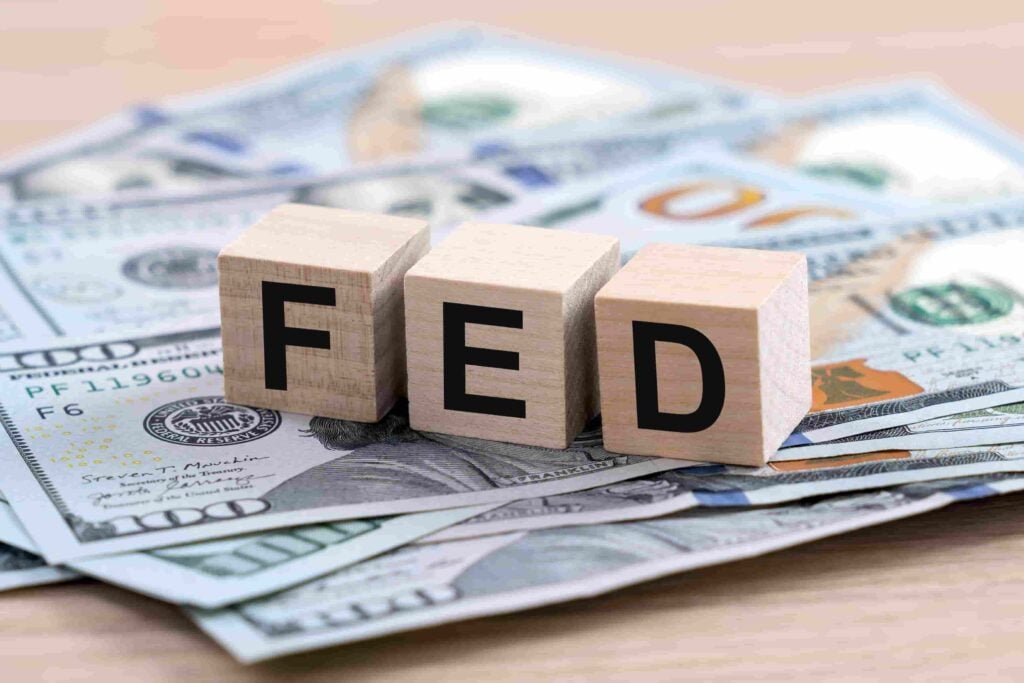
The Federal Reserve (Fed) holds the conductor’s baton in influencing inflation expectations, sculpting the intricate dance of interest rates. Through the manipulation of short-term interest rates, the Fed orchestrates a profound impact on longer-term rates, epitomized by the yield on the U.S. Treasury 10-year bond.
This market interpretation, a testament to the Fed’s prowess, intricately weaves the tapestry of economic expectations and interest rate dynamics.
Bond Market Ballet
In the realm of forecasting 30-year fixed-rate mortgage interest rates, the spotlight turns to the U.S. Treasury 10-year bond’s yield. The Federal Reserve’s meticulous management of short-term rates serves as the foundation, guiding the market’s sentiment and influencing the undulating patterns of long-term interest rates.
Observing the market’s pulse and decoding its responses to Fed monetary policy becomes a crucial compass for those navigating the realm of mortgage prognostication.
The Dynamics of Adjustable-Rate Mortgages (ARMs)
The Ever-Changing Tempo of ARMs
Unlike the rhythmic constancy of fixed-rate mortgages, adjustable-rate mortgages (ARMs) embrace variability. The interest rate of an ARM, a composition of an index value and a fixed margin, dances to the ever-shifting melody of economic indices.
Homebuyers must tread with awareness, recognizing that the monthly mortgage cost may waltz to a different tune if interest rates decide to crescendo.
Index Values
ARMs tie their fate to various mortgage indexes, crafted from the interest rates of actively traded securities, bank loans, or deposits. These indexes, though diverse, harmonize in their directional movements, mirroring the economic cadence.
Short-term in nature, these indexes echo the heartbeat of the federal funds rate, a key orchestrator in the symphony of interest rate fluctuations.
Market Expectations
The yield curve, akin to a musical score, unveils the harmony of U.S. Treasury bonds across varied maturities. Its shape, whether flat, downward, or upward-sloping, becomes a script for the market’s anticipation of Fed actions. A flat or descending curve signals an expectation of stable or lower short-term rates, while an ascending curve suggests the anticipation of a rise.
The steepness of the curve, akin to the volume of a musical composition, reflects the magnitude of the market’s projections for Fed actions. Additionally, the price of Fed funds futures emerges as a resounding overture, encapsulating the collective expectation for future short-term interest rates.
As market participants sway to this financial melody, forecasts materialize, and the intricate ballet of interest rates continues.
Understanding the orchestrations behind fixed and adjustable mortgage rates unveils the potential for financially sound decisions. This insight guides choices between ARM and FRM, and strategic decisions on when to step out of an ARM. Amidst the cacophony of financial advice, the yield curve emerges as a trustworthy guide, helping discern the true rhythm of interest rates.
Keep reading: Demystifying Volatility and Liquidity in Finance: Keys to Conscious Investing