Saying is not doing
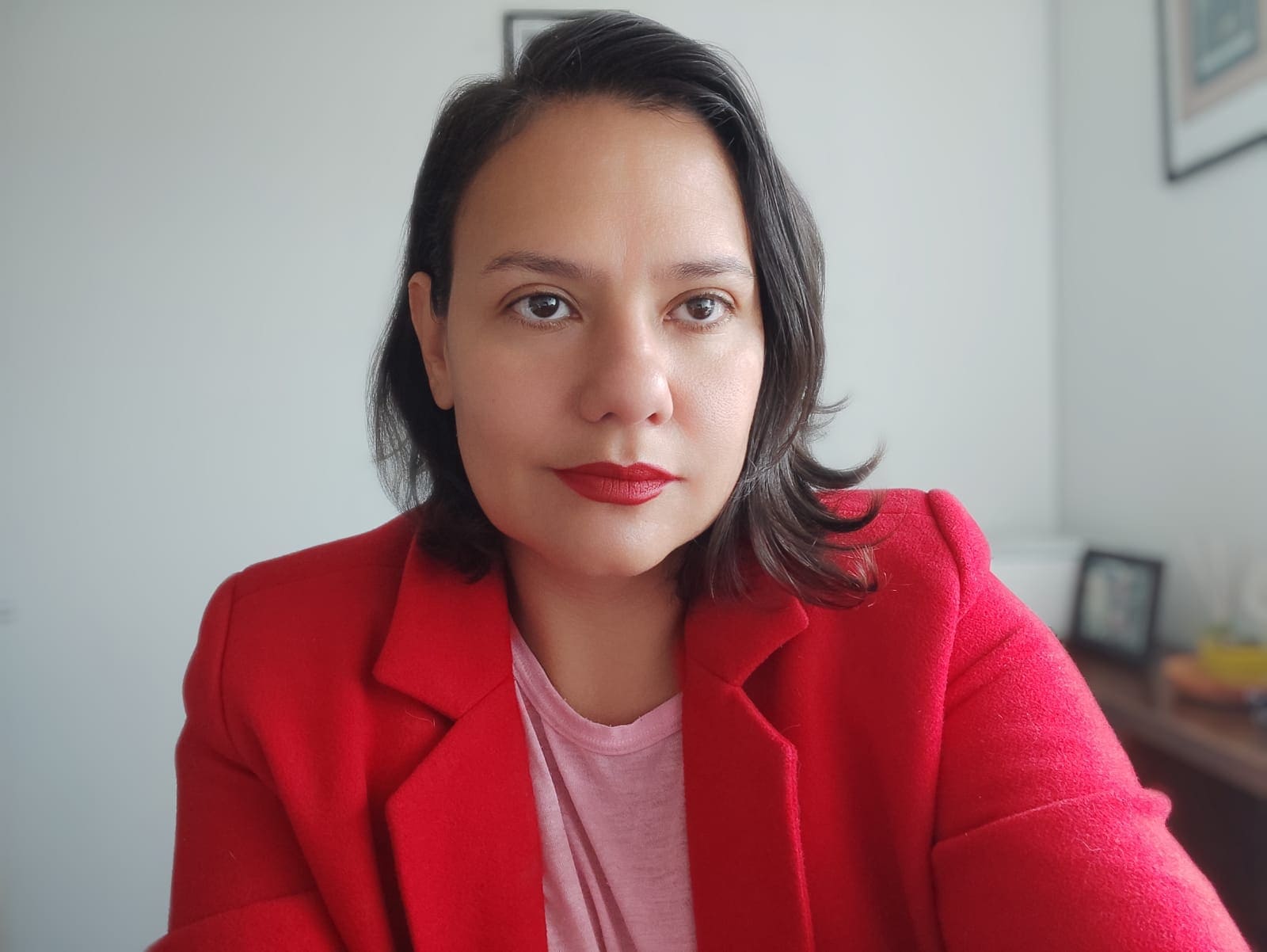
Laura Bonilla
Subdirectora de la fundación Pares. Politóloga, magíster en estudios políticos y latinoamericanista. Experta en paz, seguridad y violencias organizadas.
No matter how hard we try to believe otherwise, there is an abysmal difference between saying something and doing it. We constantly complain that nobody does anything, but the truth is that, in Colombia, perhaps due to the deep patriarchal formation we carry on our backs, we have a special disdain for “doing things”.
So much so that the so-called opinion (or non-organic) vote has increasingly turned towards people with a certain popularity and rather vague proposals. In Colombia, as in other parts of the world, we often vote for celebrities or people who simply say what we want to hear.
Fighting corruption or promoting transparency translates into a lot of extra paperwork to be filled out and reviewed by hordes of service providers, without really preventing anything. Contempt for the way policies are formulated and executed is a tradition that has been getting worse as political parties fade away.
What does one thing have to do with the other? A lot. Weak parties mean weak proposals, and in a democracy as fragile as ours, this translates into weak results. But, above all, it is about short-term executions that do not allow us to measure results.
A recent example is the comparison between monetary transfers and the traditional discourse of promoting equity. When the priority of maintaining the symbol prevails (such as the idea that only public operators should implement public policies), there is an adverse and negative effect on subsidies that, in principle, should have positive results.
And it is not that the private sector always obtains positive results. It would also be a big lie to claim that. What we should always do is let the evidence speak. And in this case, making a poor and rural person, with children and adults in their care, have to stand in line for three hours to claim a subsidy is not a minor issue.
Calculate that this implies an average cost of $50,000 pesos in transportation and food and, in addition, probably one day of work is lost (approximately $60,000 pesos).
In total, this results in an associated cost of $110,000 pesos deducted from the subsidy received, which could have been avoided by maintaining a more efficient solution. Thus, this person’s perception of his subsidy is that his situation has worsened. Let us remember that poverty also implies time poverty, which cannot be solved with simple campaigns.
On the other hand, a completely opposite case occurs with the provision of health services in rural areas. Since the approval of Law 100 of 1993, the country has focused on promoting a service that no private company with the capacity to provide it in remote areas wants to assume because it would simply go bankrupt.
If we had not focused so much on denouncing the model, but rather on having alternatives ready and studied, the country would not have become engrossed in an inane discussion on health reform.
The next example, and perhaps the most dramatic, is the implementation of the security policy. We know that we do not want to pacify the country through arms. We know that armed groups have a certain political component even in their most criminal structures. We also know that there is a deep linkage between this conflict and illicit economies, and we are experts in pointing out what should not be done. But we do not know for sure what should or can be done. Worse, we refuse to learn from our own evidence, simply because we are afraid to evaluate ourselves.
Why, then, would it be important to have strong parties? Wouldn’t it be enough to keep choosing the individual who “sounds” best to me? The answer is that expert knowledge from within is needed to have proposals that are worthwhile, produce results and allow the materialization of ideas for change in the long term, as change should naturally be done.
It is simply absurd that the parties are a patchwork quilt of whatever, whose only expertise is to administer the state bureaucracy. If our left had not been so focused on tearing each other apart, we would probably have better results to show for it today.
Why do companies go bankrupt?