Weapons delivered by the West that are changing the course of the war in Ukraine
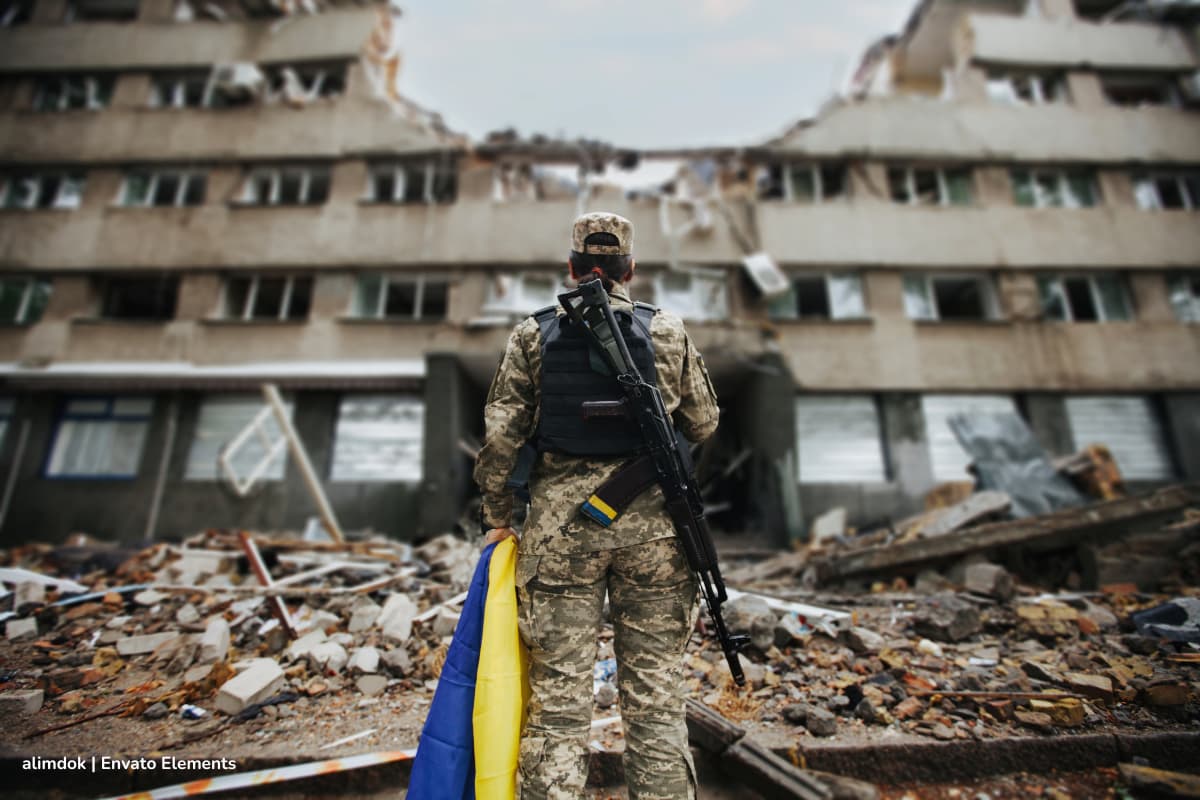
These weapons, which range from cutting-edge drone technology to precision-guided missiles, have not only improved Ukraine’s defense but also substantially altered the dynamics of the battlefield.
Keep reading to find more about this game-changing arsenal, along with its strategic significance and the dynamic role they play in the war in Ukraine.
Table of Contents
Forecasts on the war in Ukraine
When Russian President Vladimir Putin first sent troops into Ukraine a year ago, the general opinion predicted that the invading forces would win with ease and decisiveness. However, the anticipated Russian victory over the war in Ukraine has not materialized, and experts have identified a number of factors that can be responsible for this unexpected turn of events.
Among these, the Ukrainian soldiers’ tenacity and high morale, combined with their astute tactics, have been instrumental in defying original Russian victory predictions. The addition of Western weapons to the Ukrainian arsenal has also played a key role in changing the dynamics of the conflict.
You may be interested in: The Historical Conflict Over Nagorno Karabakh
While recent headlines have highlighted the potential impact of cutting-edge technologies like the Patriot air defense system and Western combat tanks, it’s important to note that these weapons have not yet been used on Ukrainian soil.
However, some Western-made weapons have already significantly influenced the direction of the conflict. In this essay, we will examine three such incredibly potent weapons that Ukrainian forces have effectively used on the battlefield.
Javelin
This anti-tank missile system was prompted by the need for a strong defense at the beginning of the war in Ukraine as Russian armored columns were expected to approach Kyiv.
The Javelin, known for its user-friendly interface, has the “fire and forget” function, enabling operators to fire and quickly take cover while precisely aiming at Russian tanks’ exposed horizontal surfaces. Early photographs of Russian tanks with their turrets damaged, which were frequently credited to the Javelin, showed its enormous impact. Notably, compared to more offensive alternatives like warplanes, this weapon’s price and defensive character made it politically acceptable for international assistance.
This quality was especially important early in the conflict because Russian forces tended to form columns, especially when trying to enter cities. An operator of a Javelin could launch the missile from cover, such as a structure, and then quickly leave the area before the Russians could strike again.
The Javelin also demonstrated its potential in locating the weak spots on Russian tanks, particularly their horizontal surfaces. The missile from Lockheed Martin has a trajectory that begins with an upward curve after launch and then precisely descends onto the target from above.
Images from the early stages of the battle commonly showed Russian tanks with their turrets blown off—a result that was frequently linked to the use of Javelin missiles—making the consequential impact of the Javelin system plainly clear.
Because of the importance of the Javelin in the battle, U.S. President Joe Biden visited the Alabama plant where these missiles were made about two and a half months into the fighting to thank the workers for their crucial commitment to Ukraine’s defensive efforts. President Biden acknowledged the significant difference the Javelin system made in supporting Ukrainian forces, who were facing intense pressure and firepower, during his visit and praised its profound impact.
The Javelin also had the benefit of being politically acceptable, which was particularly important at the outset of the conflict. According to Michael Armstrong, an associate professor at Brock University in Ontario, the Javelin is a politically sensible option for other nations to lend to Ukraine due to its low cost and defensive nature. Governments, on the other hand, disagreed about who should provide more expensive offensive weapons, such as warplanes.
You may also be interested in: Totalitarianism: An Analysis of Its Origins, Emergence, and Comparative Dynamics
HIMARS
According to the detailed definition provided by the U.S. Army, HIMARS, short for High Mobility Artillery Rocket System, stands for a versatile, combat-proven, all-weather, 24/7, lethal, and agile precision strike armament platform.
HIMARS is essentially a 5-ton truck with a pod that can shoot up to six rockets almost simultaneously, to put it another way. These rockets have the ability to quickly change positions in order to dodge potential counterattacks, carry explosive payloads, and be deployed far from the battlefield’s front lines.
Following the initial prominence of the Javelin anti-tank missile in the early stages of the war, Mark Cancian, a senior adviser at the Center for Strategic and International Studies’ International Security Program, accurately described HIMARS as the iconic weapon of the later stages of the battle.
In July, Russian reporter Roman Sapenkov described seeing a HIMARS hit on a Russian base near Kherson’s airfield, which Moscow’s forces had previously controlled. This incident serves as a good illustration of HIMARS’ effectiveness. In Sapenkov’s assessment, the amazing accuracy of HIMARS was highlighted by the fact that numerous rockets made extraordinarily near landings on their designated targets.
Two key effects of the deployment of HIMARS were emphasized by Yagil Henkin, a professor at the Israel Defense Forces Command and Staff College, in an article for the U.S. Marine Corps University Press. First off, these attacks forced the Russians to move their ammunition storage facilities further back, which reduced the amount of firepower available to Russian artillery forces stationed close to the front lines.
Second, Russian supply operations were hampered by the use of long-range rockets to destroy vital infrastructure, such as bridges.
It’s vital to emphasize that Lockheed Martin is the manufacturer responsible for the creation and production of the HIMARS system, which is created and patented in the United States.
Bayraktar TB2 drone
Due partly to its extensive use in the war in Ukraine, the Turkish-designed Bayraktar TB2 drone has become one of the most well-known unmanned aerial vehicles (UAVs) in the world. What makes it special is how cost effective it is, as it was built with easily accessible parts, offers outstanding combat capabilities, and painstakingly records its operations on video.
The Bayraktar TB2’s movies show how its arsenal of missiles, laser-guided rockets, and smart bombs can be used to efficiently neutralize Russian armored vehicles, artillery installations, and supply lines. These visual records, which are frequently widely disseminated online, are a prime example of the contemporary character of battle in the digital age and have attracted a lot of attention.
These visual records, which are frequently widely disseminated online, are a prime example of the contemporary character of battle in the digital age and have attracted a lot of attention.
The broad distribution of these TB2 movies has been effectively described by Aaron Stein, a senior fellow at the Foreign Policy Research Institute, as being representative of the TikTok period of modern warfare.
The Bayraktar TB2 has shown to be fairly effective, despite not being a “magic weapon”, as Stein noted. It does, however, have some weaknesses, most notably its comparatively poor speed and susceptibility to air defenses. About 17 of the 40 to 50 TB2s provided to Ukraine, according to information from the open source intelligence website Oryx, have been lost in battle.
Stein stressed that despite these losses, the cost-effectiveness of the drone surpasses the cons, making replacements quite simple. Notably, these drones’ strategic importance was highlighted by intentions to create a production line for them in Ukraine even before the crisis. Additionally, the use of TB2 drones may have saved the lives of Ukrainian pilots who would have otherwise been assigned to dangerous missions.
According to recent reports regarding the war in Ukraine, the use of TB2 drones may have decreased as a result of Russian forces’ development of defenses. However, the drone’s proponents claim that it was crucial at the most perilous times for Ukraine.
According to Samuel Bendett, an adjunct senior fellow at the Center of Naval Analyses Russia Studies (CNAS), the videos demonstrating its success in countering Russian threats significantly raised the morale of Ukrainian forces.
Essentially, the Bayraktar TB2 has not only left a lasting impression on the battlefield but has also attained a special position among Ukrainians, as evidenced by the production of a music video honoring its efficiency.
The war in Ukraine might be hading towards a different direction and these weapons have a lot to do with it.
These Western weapons have not only bolstered Ukraine’s defense but have also redefined the dynamics of modern warfare.
Moreover, their impact extends beyond the battlefield, as these weapons have garnered international attention and become symbols of resilience and innovation in the face of adversity. As the war in Ukraine continues to deepen in complexity, the strategic significance of these advanced weapons remains paramount in shaping the future of the war.
Keep reading: Stalingrad Battle, the bloodiest war of the WW2