What happens if you put hot food in the fridge?
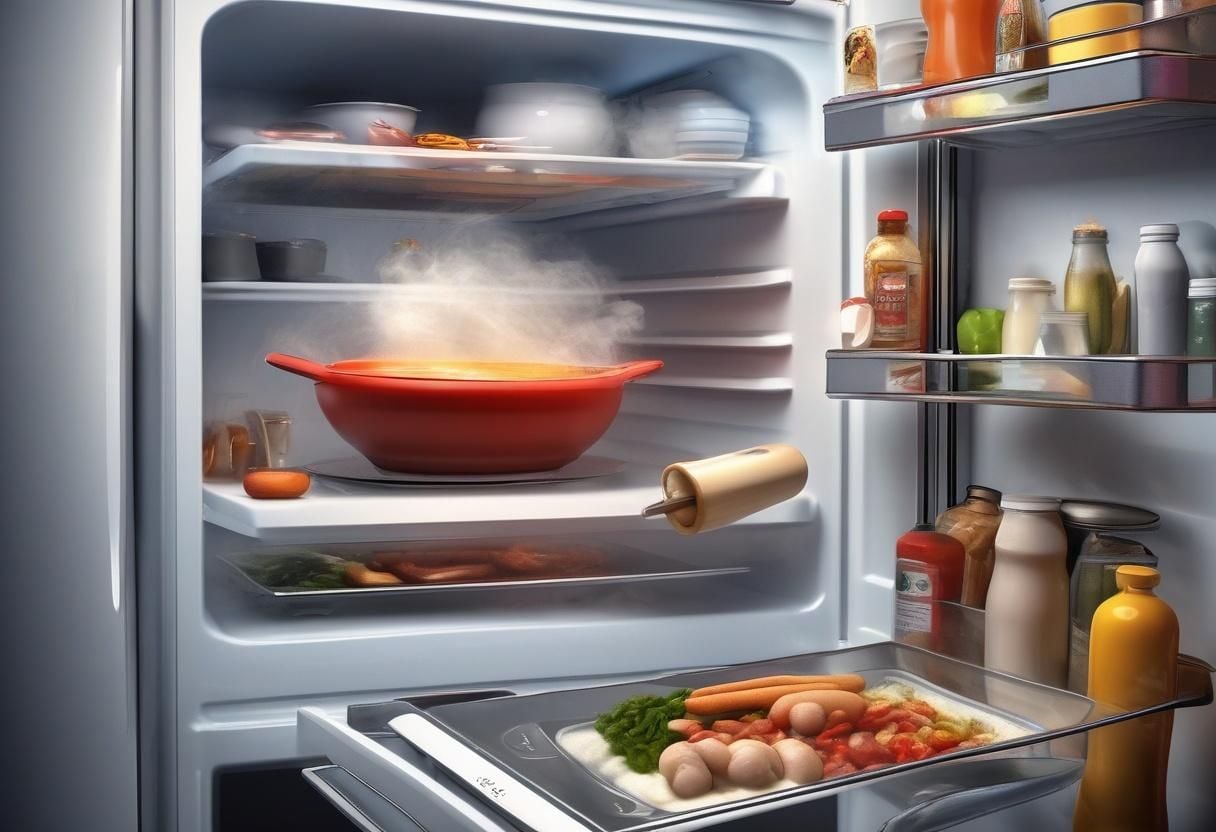
What happens if you put hot food in the fridge?
Putting hot food in the fridge can lead to several issues concerning food safety and preservation. Most importantly, it can raise the temperature inside the fridge, putting perishable items at risk of bacterial growth.
Additionally, condensation can form in the fridge, leading to increased humidity, which can also promote spoilage of other stored items.
Here’s how you can handle hot foods properly.
Why it’s important to cool food before refrigerating
Cooling food before placing it in the fridge is vital for several reasons:
- Temperature Control: By allowing food to cool, you help maintain the internal temperature of the fridge, ensuring the safety of all food stored within.
- Bacterial Growth: Placing hot food directly into the fridge can cause the surrounding foods to warm, leading to an environment where bacteria thrive.
- Moisture Issues: Hot food releases steam, which can create condensation inside the box, promoting spoilage and impacting the taste of other items.
How to safely store hot food
To safely store hot food, follow these best practices:
- Let It Cool: Allow hot food to cool at room temperature for no more than two hours.
- Use Shallow Containers: Divide large amounts of food into smaller portions with shallow containers to speed up cooling time.
- Avoid Overcrowding: Ensure that food items are spaced out in the fridge for better air circulation.
Best practices for fridge organization
To maintain food safety, keep your fridge organized:
Tendencias:
➜ California subirá su salario mínimo a US$17,40 en 2027: el cambio también eleva a US$72.384 el umbral para ciertos empleados
➜ ¿Le faltan semanas para pensionarse? Tres fallos de 2026 aclaran cuándo deben contarlas aunque el empleador no haya pagado
➜ FOMAG alerta por patrones anómalos en incapacidades: qué pasa con más de 340.000 docentes
- Store Raw Meats Separately: Keep raw meats on the bottom shelf to avoid contaminating other foods.
- Check Expiration Dates: Regularly review items in your fridge and discard any expired products.
- Keep the Temperature Consistent: Always keep your fridge temperature below 40°F (4°C).
Signs of spoiled food in the fridge
Always be vigilant for indications of spoiled food:
- Changes in Color or Texture: Look for unusual discolorations or sliminess.
- Odor: A sour or off odor can indicate spoilage.
- Mold: Visible mold growth is a clear sign to throw it away.
Related food storage guides
Understanding how to store various foods can help maintain their freshness. Here’s a list of food storage times to consider:
- How long do scallops last in the fridge?
- How long are baked beans good for in the fridge?
- How long do cooked beets last in the fridge?
- How long does queso last in the fridge?
- How long is cooked corn good in the fridge?
In conclusion, while putting hot food in the fridge might seem convenient, it can lead to safety issues and spoilage. Always cool foods adequately and follow safe handling practices to keep your meals safe to enjoy!